Want to know more about Tarchon?
Non-Statutory Consultation
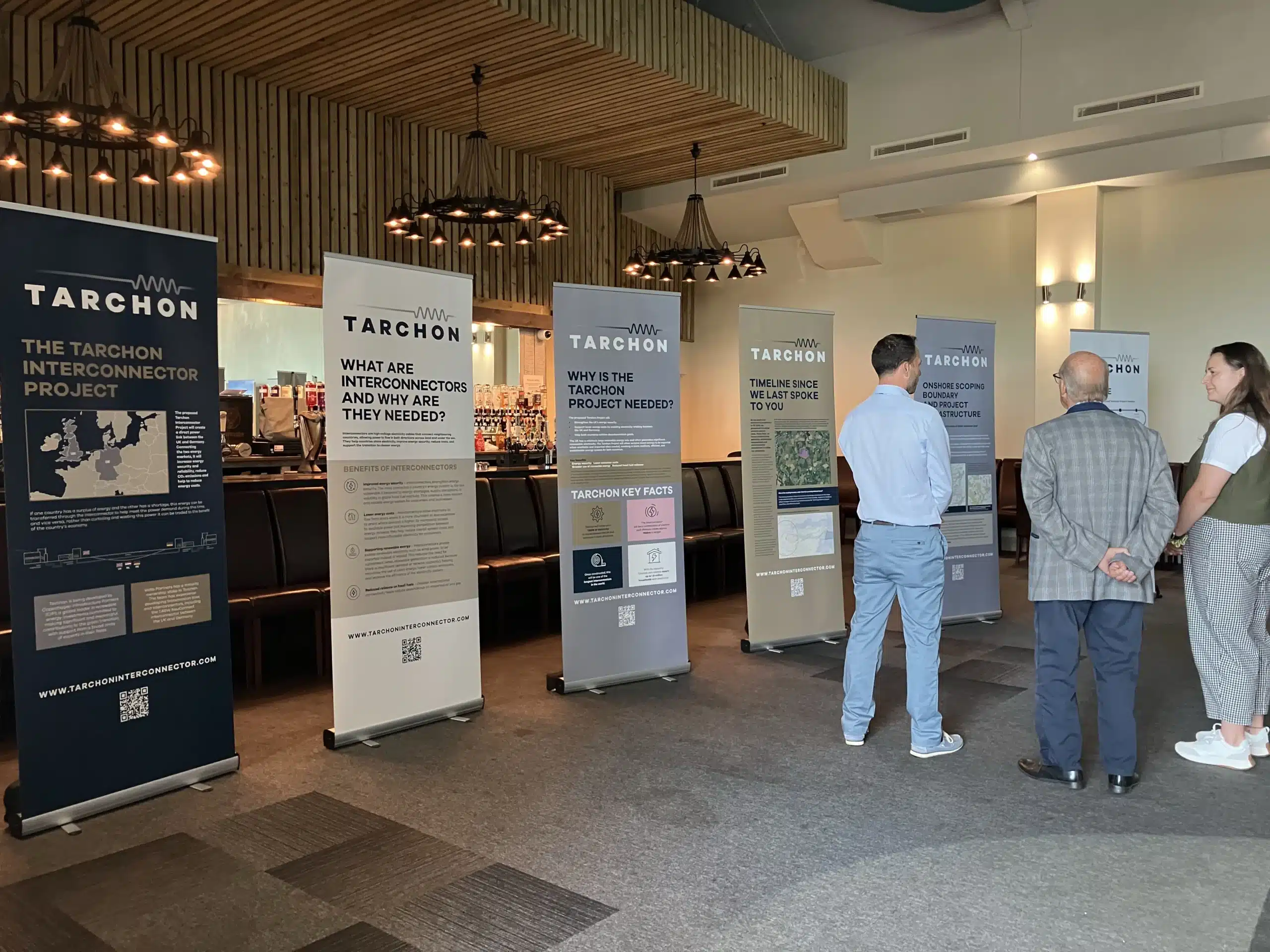
From Friday 3rd July to Thursday 13th August 2026, we held our second non-statutory consultation on the Tarchon Interconnector Project, giving local communities and stakeholders the opportunity to review the latest Project information, updated maps and tell us what matters most to them regarding the proposals.
Across the consultation period, we hosted five in-person information events and one webinar, welcoming 178 attendees (not including those that may view the webinar after the event from the website recording). We received 87 pieces of feedback from residents, landowners, local representatives, business owners, statutory stakeholders and local authorities, via email, submission of feedback at events, digital feedback forms and freepost.
We worked to reach as many people as possible ahead of the consultation, distributing more than 8,000 postcards across Tendring in Essex. This was supported by print and digital advertising through the Harwich & Manningtree Standard, targeted Facebook advertising, posters sent to local venues and community centres, and emails sent to statutory stakeholders and subscribers to our mailing list.
The feedback we received showed a strong level of interest in how the Project could affect the local area. The main concerns were focused on the potential impact on local residents and communities, the rural landscape, agricultural land, wildlife, construction disruption and property values.
A clear theme throughout the consultation was the question of where the onshore infrastructure should be located and how it should be routed. Respondents asked us to look more closely at alternative locations and routes, including areas closer to the A120, existing industrial or previously developed land, offshore alternatives and opportunities to coordinate with other proposed energy projects. We also heard concerns about the cumulative effect of multiple infrastructure projects in the area, with some respondents calling for better coordination between developers to help reduce repeated disruption, additional access routes and pressure on local roads and communities.
Respondents told us they wanted greater clarity about how the onshore scoping boundary will be refined, how potential sites and routes are being assessed and why certain options may be discounted. Other recurring issues included construction traffic and access, impacts on farmland and the natural environment, proximity to homes, compensation and property values, and questions about the need for and wider benefits of the Project.
The consultation also highlighted a number of very specific local issues, from individual properties and access routes to environmental features and existing infrastructure. These points are being reviewed so they can be considered by the relevant technical teams as the Project develops.
Feedback on the consultation process itself was mixed, with 54% of respondents agreeing that information provided during the consultation was very or somewhat useful. A number of respondents positively commented on the helpfulness and knowledge of Project representatives, the quality of the consultation materials and aspects of the event organisation. At the same time, people asked for more detailed information and greater transparency about how feedback is influencing Project decisions.
The feedback received through this second non-statutory consultation will help inform the next stage of Project development. As proposals are refined, we will continue to review the issues raised and continue to create opportunities for local communities and stakeholders to stay involved and informed.
All consultation materials, along with our Summer Non-Statutory Consultation Report, are now available to view in the document library.